We lost a quiet revolutionary this month.
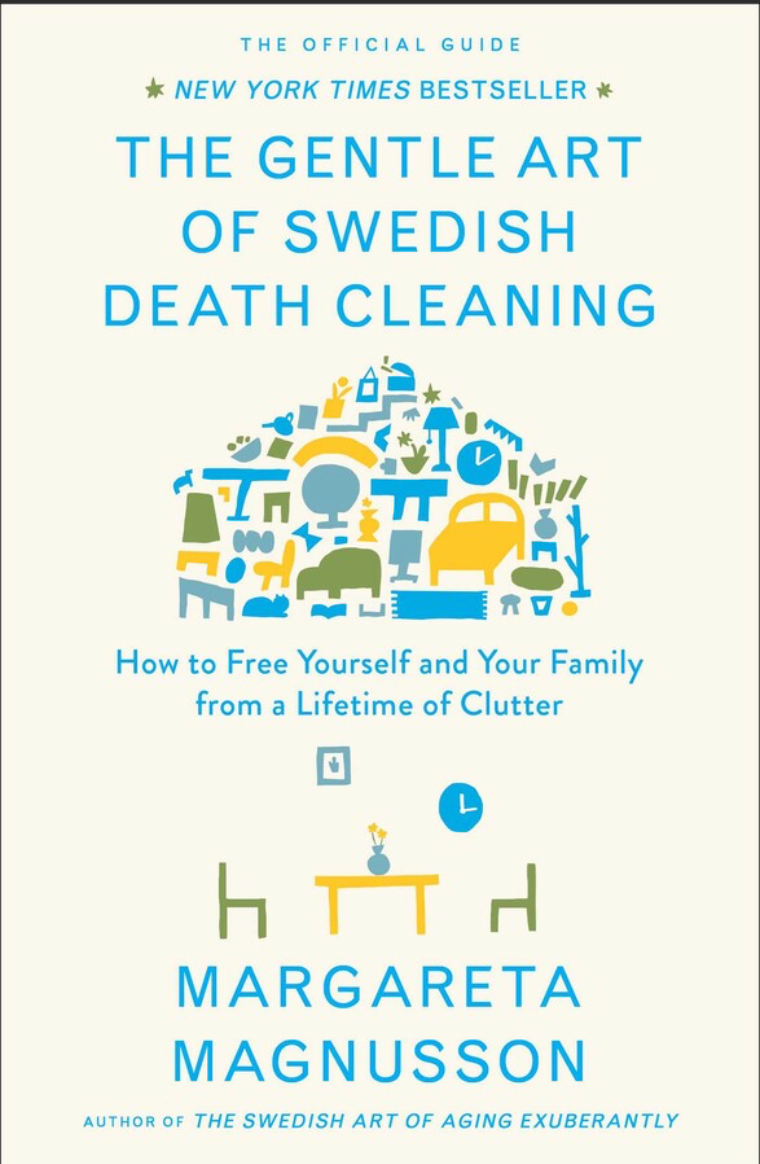
Margareta Magnusson, the artist-turned-author who wrote The Gentle Art of Swedish Death Cleaning, died on March 12 in Gothenburg, Sweden. Her daughter Jane confirmed that her mother had left her attic and basement empty. Even at the very end, she practiced what she preached — sparing the people she loved from the burden of sorting through a life's worth of accumulated things.
It was, like everything she taught us, an act of love disguised as an act of practicality. Swedish Death Cleaning, known in Sweden as döstädning — literally "death cleaning" — is part decluttering method, part life philosophy, and despite the name, it's surprisingly uplifting.
The philosophy, popularized internationally by Swedish artist Margareta Magnusson's book The Gentle Art of Swedish Death Cleaning, encourages people to simplify their lives and possessions to ease the burden on loved ones who will handle their estate after they pass.
It asks you to look around your home and ask a quietly radical question: Who do you think will deal with all of this when you are no longer here?
It is, at its heart, an act of love disguised as possession editing.
But here's what most people miss: your most overwhelming clutter isn't in your closets, your garage, or your grandmother's china cabinet. It's invisible. It lives in your email inboxes, your bank accounts, your streaming subscriptions, your password manager — or worse, scattered across a dozen sticky notes and your own memory.
Swedish death cleaning experts have noted that the practice should extend to digital accounts and passwords, ensuring a comprehensive approach to one's legacy.
And yet this is precisely the place where most people — even those who have dutifully sorted their linen closets and labeled their keepsakes — stop short.
One Final Message was built for exactly this gap.
What Döstädning Gets Right
What makes it different from other organizing trends is its moral and relational core. It is not focused on personal joy or aesthetics, but on legacy, responsibility, and relationships.
One of the key principles is taking responsibility for your impact on the people around you — by decluttering and removing unnecessary belongings, you make their lives easier as they have fewer items to sort through, which alleviates emotional distress during an already challenging time.
That is a beautiful and practical truth. The problem is that the tradition was developed in an era when a person's entire estate could be seen, touched, and sorted through in an weekend. You could walk through a house and find the important documents in a drawer, the valuable jewelry in a box, the car title in a folder.
Today, an entire financial life can exist without a single piece of paper. Bills autopay. Insurance renews silently. Social media accounts hold years of memories with no physical equivalent. Cryptocurrency sits in a digital wallet with a seed phrase that exists only in one person's head. A small business can run entirely through a set of logins that no one else knows.
Sorting through a lifetime of possessions while grieving can be painful and guilt-inducing. Leaving these decisions for others often creates unnecessary stress at an already difficult time. Now imagine doing that when you can't even see the possessions — when you don't know what accounts exist, let alone how to access them.
The Digital Burden We Leave Behind
When someone dies without documenting their digital life, their loved ones face a peculiar kind of chaos. It's not the chaos of too many things — it's the chaos of invisible things.
A surviving spouse or adult child may not know which bank accounts exist, or that the cell phone bill is on autopay and will keep charging a dead person's card for months. They may not know that a beloved email address contains the only copies of family photos. They may not know the login to a home security system, or where the household's digital documents are stored, or even what subscription services to cancel.
This isn't a failure of love. It's a failure of documentation.
One Final Message: Döstädning for the Digital World
The core philosophy of Swedish death cleaning acknowledges that by minimizing the clutter surrounding us, we ultimately help our loved ones manage our remains without feeling overwhelmed.
One Final Message takes that philosophy and applies it to the one category of clutter that traditional death cleaning has always struggled to reach.
Our platform lets you document everything your loved ones would need to navigate your digital life — and your practical one. Account credentials and digital assets. Bill payment instructions. Subscription inventories. Pet care routines. Burial wishes. Step-by-step guides for tasks your partner may never have managed. Whatever matters, organized clearly and compassionately.
And like the best aspects of döstädning, it isn't just for the very old or the very ill. The key to successful Swedish death cleaning is to start early — beginning while you're still able-bodied and in good health. The same is true here. The best time to document your digital life is not when you're facing a deadline, but now — when you have the clarity and the calm to do it thoughtfully.
One Final Message checks in with you regularly. If you stop responding, your instructions are delivered to the person you've chosen. Not a box of things to sort through. Not a mystery to unravel. Just a clear, loving message that says: Here is everything you need. I thought of you. I prepared this for you.
Your closets can wait. Start with your passwords.